

What Is Retinol Purging? How to Tell the Difference Between Purging and a Breakout After 60
I'll let you in on something: until recently, I didn't know what "retinol purging" was either. And I've been formulating skincare for years! So if you've seen the term floating around and nodded along politely, you're in very good company.
Once I looked into it, I realized this is exactly the kind of thing women our age need someone to explain straight — because the difference between purging and a real breakout determines whether you should stay the course or put the bottle down. Let's sort it out together.
What retinol purging actually is
Think of it this way: right now, you have tiny clogs forming deep in your pores — the ones that would have become pimples six or eight weeks from now. When you start a retinol, it accelerates your skin's renewal cycle, and everything trapped underneath gets pushed to the surface early. That's purging. Your skin isn't creating new acne; it's clearing out the backlog ahead of schedule.
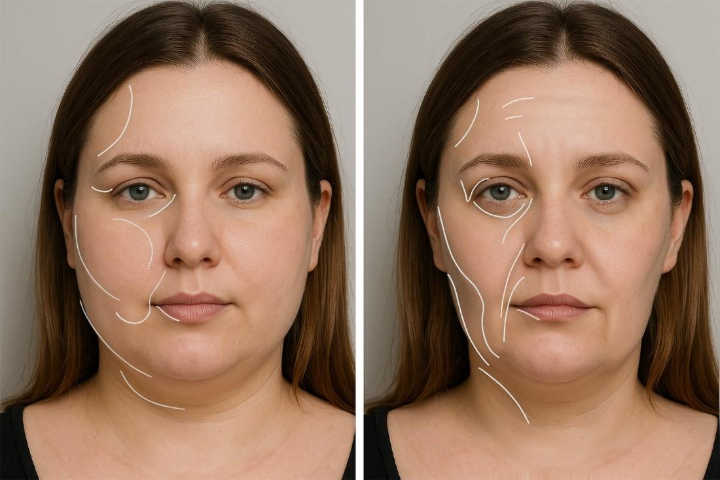
That's why purging clusters exactly where your skin already misbehaves — along the jawline, the chin, the forehead. Same old neighborhoods, just all showing up at once.
A crucial distinctionNot all retinoids purge equally. Purging is overwhelmingly a prescription-strength story — tretinoin and its cousins are powerful drugs, and they put skin through a real adjustment. Gentle cosmetic retinol formulas, especially buffered ones, rarely cause anything like it. So if you've heard horror stories, ask which retinol caused them before you worry. Odds are, it wasn't a gentle one.
Purging vs. breakout: how to tell the difference
This is the part that matters, so here's your cheat sheet — with one reminder: this troubleshooting matters most for prescription-strength products. With a gentle formula like ours, you may never need it:
- Where: Purging appears where you normally break out. A reaction shows up in places that are usually clear for you.
- When: Purging starts within 1–2 weeks of starting retinol (or increasing your dose) and fades by week 4–6. A breakout has no predictable timeline — and anything still going strong past two months isn't purging.
- What it looks like: Purging is small whiteheads and blackheads that heal faster than usual. Deep, painful cysts, burning, itching, or a rash point to irritation or allergy instead.
- What it means: Purging means the retinol is working — ride it out, possibly at a lower frequency. A reaction means something's wrong — stop using the product.
How to start retinol after 60 (without the drama)
Here's my honest advice — and I want to be precise about when it matters most. Every precaution below is essential if you're using a prescription retinoid, which is dramatically stronger than anything sold over the counter. With a gentle cosmetic formula like our Retinol Plus, much of this cushioning is already built into the bottle — which is exactly why I formulated it for women who can't tolerate prescription strength.
If you're on prescription, take every one of these seriously:
- Start slowly. Once or twice a week at night — not nightly. This matters doubly with prescription retinoids, which are significantly stronger than cosmetic retinol. Give your skin weeks, not days, to adjust.
- Try the sandwich method. Moisturizer first, retinol, then moisturizer again. It buffers the delivery and your skin will thank you.
- Moisturize like you mean it. Retinol can be drying, and dryness at our age is no joke. A rich night cream on top makes all the difference.
- Don't skip daytime SPF. Retinol makes skin more sun-sensitive. Non-negotiable.
- Hands off. Don't pick at purge pimples — they'll heal faster if you leave them alone.
Why I formulated ours for women who can't do prescription strength
Here's what I'm proud of: when I created our Retinol Plus Serum, I had a specific woman in mind — the one whose dermatologist prescribed tretinoin and whose skin said absolutely not. The peeling, the redness, the purge. I wanted her to still get retinol's benefits without the battlefield.
So I built the cushioning right into the formula — hyaluronic acid to keep skin hydrated and calm while the retinol does its deep work. I rarely hear complaints about breakouts from our customers, and I believe that cushioning is why. Please don't read this post and conclude that all retinol products purge your skin equally — they don't, and ours was designed to prove it.
Even with my rosacea-prone skin, I've been able to use it successfully — which tells you everything about how gently it behaves. If you've been afraid of retinol because of horror stories, this is the kind of formula that lets you get the benefits without the battlefield.
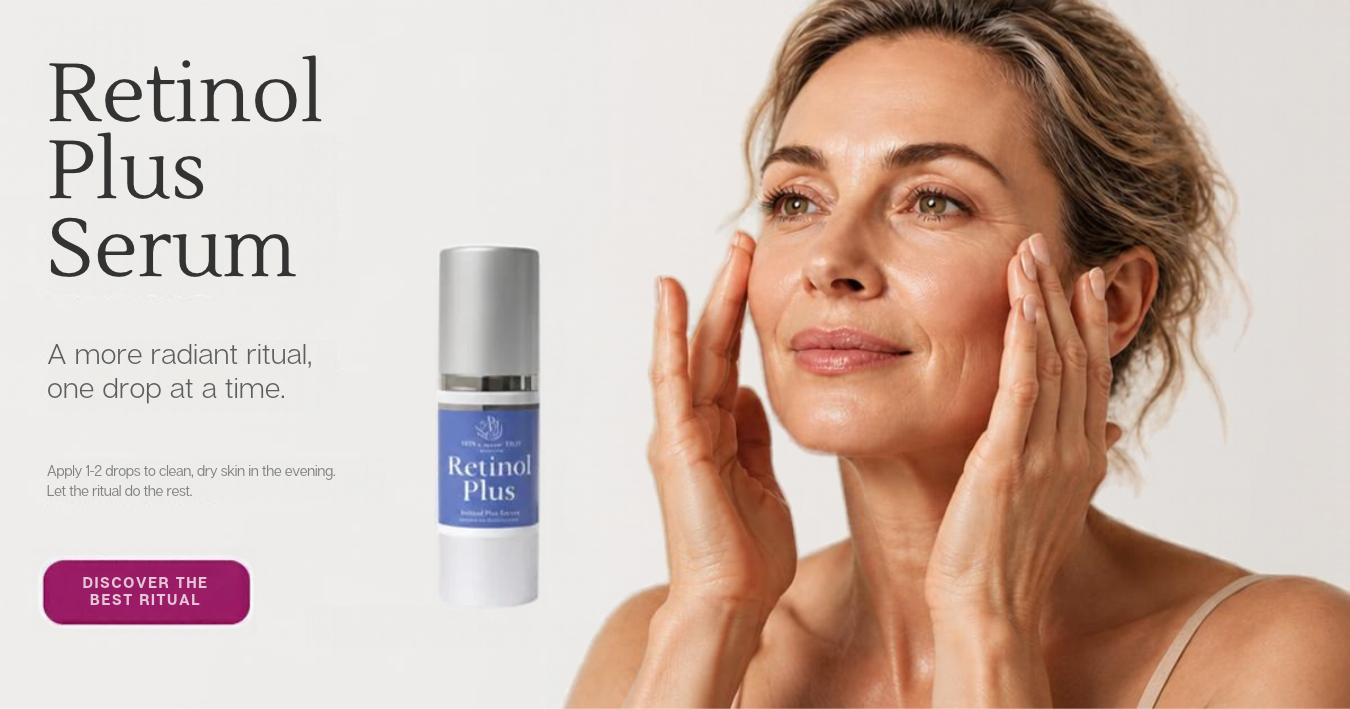
Our Retinol Plus assists with smoothing the look of deep wrinkles and fine lines while supporting collagen production and cell turnover — and the hyaluronic acid keeps skin hydrated and calm while it works.
Frequently asked questions
How long does retinol purging last?
Typically 4–6 weeks — about one full skin-renewal cycle. If breakouts are still going strong at week eight or beyond, it's not purging.
Can you prevent retinol purging?
You can't always prevent it, but you can soften it: start with a low frequency, use the sandwich method, keep skin well moisturized, and choose a buffered formula with hydrating ingredients like hyaluronic acid.
Should I stop using retinol if my skin is purging?
Not necessarily. If it matches the purging pattern (usual spots, early timeline, mild whiteheads), reduce how often you apply it and ride it out. Stop immediately if you see burning, itching, rash, cysts in new areas, or anything lasting past two months.
Does everyone purge on retinol?
No — and this is the misconception I most want to correct. Purging is most common with prescription-strength retinoids and higher concentrations. Many people using gentler cosmetic formulas never purge at all. If a product is well-formulated with buffering, hydrating ingredients, your skin may simply adjust quietly.
Ready to try retinol without the fear?
Our Retinol Plus Serum pairs retinol with hyaluronic acid and gotu kola — effective, yet gentle enough for my own rosacea-prone skin.