

You've seen the headlines. A friend starts a GLP-1, the weight comes off, and a few months later her face looks… different. Hollower. More lined. Tired in a way sleep doesn't fix.
I'll be honest with you the way I'd want someone to be honest with me: I've watched this happen, I've read the research, and the scary headline version isn't the true version. Nobody's face is being melted by a medication. But something is happening — and if you're over 50, it can hit you harder than it hits a 35-year-old. Let me walk you through what's actually going on, because once you understand it, the fix stops feeling mysterious.
It's not the drug. It's the speed.
Here's what I've always known, and you probably have too: when you lose weight, skin sags. That's not new. What is new is the pace. These medications can take off 15 to 20 percent of total body weight in a matter of months. Skin that would have had years to adapt to a gradual loss is suddenly being asked to shrink-wrap itself in weeks. It can't keep up — so it drapes.
Think of it like a balloon that's been inflated for years and then deflates all at once. The rubber doesn't snap back instantly. Your skin is the same — especially after 50.
It's not just fat you're losing
This is the part most articles skip, and it's important. Body scans from the major GLP-1 trials showed that a large share of the weight lost wasn't fat at all — roughly 40% of it was lean mass, meaning muscle.
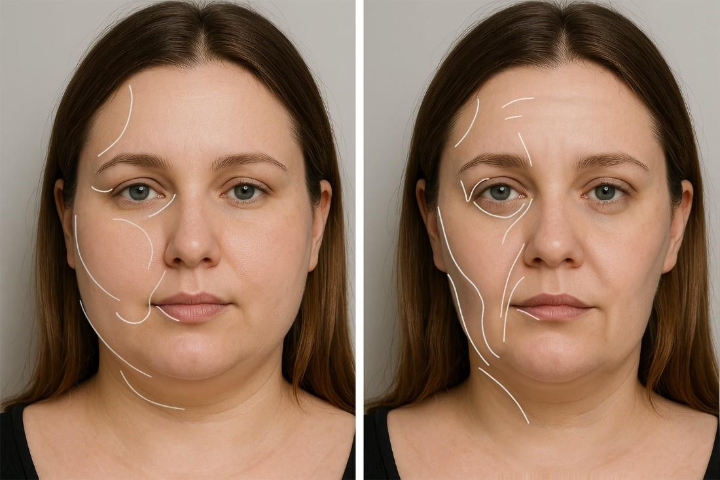
Muscle is part of what fills out your face, your arms, your everything. When the fat and the muscle underneath shrink at the same time, the skin envelope looks far more deflated than fat loss alone would cause. The temples hollow, the cheeks flatten, the jawline softens. It's not your imagination — there's literally less structure under the skin than before.
After 50, your skin's scaffolding is already thinner
And here's the piece that makes this our conversation, not a generic one. After menopause, declining estrogen means your skin is producing less collagen, less elastin, and less hyaluronic acid — the three things that keep skin firm, springy, and plump. (I'm one of them. I feel this in my own skin every morning.)
So rapid weight loss isn't landing on resilient 30-year-old skin. It's landing on skin whose support structure is already thinning. That's why two women can lose the same amount of weight and the 58-year-old sees far more sagging than the 38-year-old. Add in that rapid weight loss can deplete nutrients and weaken the skin barrier — hello, dryness and that crepey texture — and you've got the full picture.
It's not one cause. It's the collision of three: speed, muscle loss, and menopausal skin.
So what actually helps? (The at-home part)
Let me be straight: no cream re-inflates a deflated face. Anyone who tells you otherwise is selling something. But your skin is still a living organ that responds to support — and while it catches up, the right ingredients assist with firmness, texture, and barrier strength. Here's what's actually worth your time:
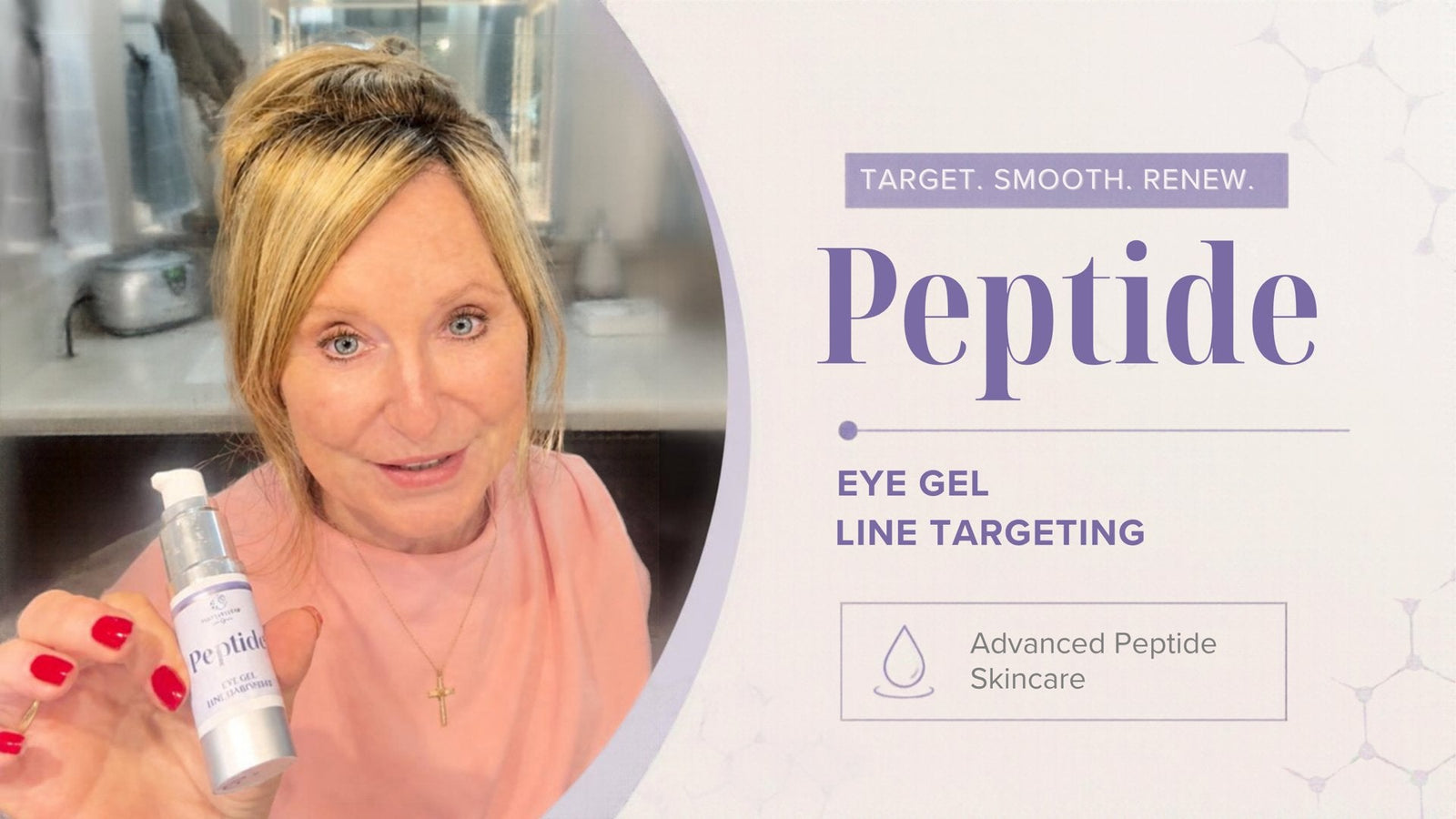
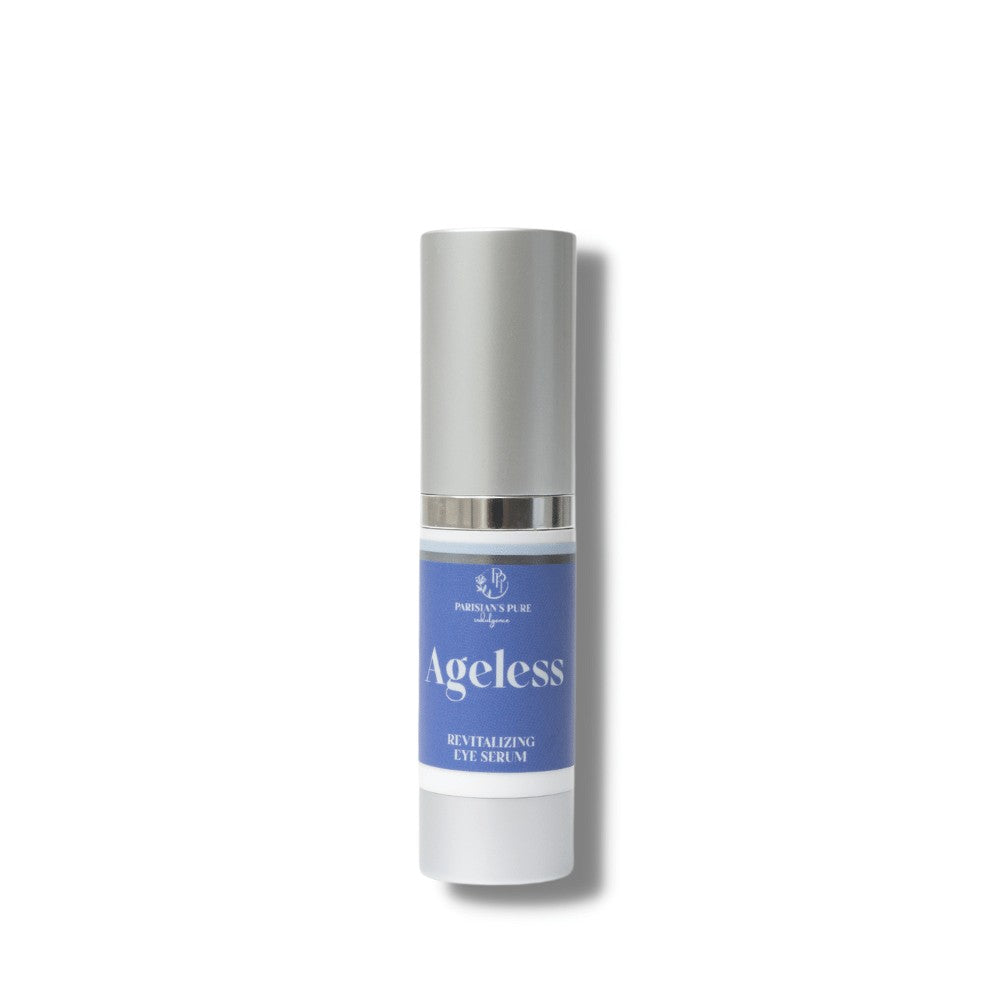
Peptides. These are the building blocks your skin uses for collagen structure. A peptide formula assists with the look of firmness and fine lines. Around the eyes is where deflation shows first, so if you're adding one targeted treatment, that's where I'd start.

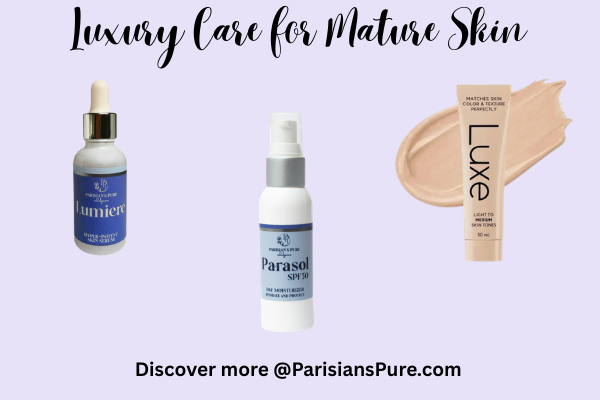
Vitamin C in the morning. Antioxidant protection plus brightening, layered under SPF every single day. Non-negotiable. That's exactly why I made my Platinum Pure Vitamin C Serum — it assists with brightness and dark spots, and gives your skin its morning antioxidant shield before SPF goes on.
A retinoid. The most evidence-backed topical there is for collagen support — but it demands consistency and patience. Give it three to six months of regular use before you judge it.Look for a formula that pairs retinol with hyaluronic acid, because hydration keeps the retinoid journey comfortable. Even with my rosacea prone skin, I've been able to successfully use our Retinol Plus Serum because of the addition of hyaluronic.
Hyaluronic acid + ceramides. Hyaluronic acid draws in hydration and plumps the look of skin; ceramides

keep your barrier steady while everything else does its work. If your skin has gotten dry or sensitive during weight loss, this duo is your comfort blanket. My Opulent Night Cream was made for exactly this — overnight hydration with rosehip oil and hyaluronic acid, made for mature skin, so you wake up to skin that feels soft and looks visibly vibrant.
Protein and patience. Skin is built from the inside too. Adequate protein supports the muscle you're trying to keep, and time lets skin remodel. This is a months-long story, not a weeks-long one.
What to ask your doctor
I'm a skincare formulator, not your physician — so please hear this part clearly. If you're on a GLP-1 or considering one, talk to your doctor about preserving muscle during weight loss (strength training and protein intake come up in every serious conversation about this), and about any skin changes that worry you. The aesthetic stuff is real, but your health comes first, always.
The bottom line
"Ozempic face" makes a great headline, but the truth is kinder and more useful: rapid weight loss on menopausal skin. Once you see it that way, it stops being scary and starts being manageable. Support your skin's structure, be patient with the timeline, and don't let a headline make you feel like something went wrong with you.
Nothing went wrong. Your skin just needs a minute to catch up — and a little help while it does. 💛
Frequently asked questions
Does Ozempic cause sagging skin?
Not directly. The sagging associated with GLP-1 medications comes from rapid, significant weight loss — not the drug itself. Losing 15–20% of body weight in months, including lean muscle mass, leaves skin with less underlying structure. The effect is more visible after 50 because menopausal skin has already lost collagen and elastin.
Will the sagging go away on its own?
Skin can remodel and tighten somewhat over time, especially with consistent skincare, good nutrition, and strength training to preserve muscle — but it's a slow process measured in months, not weeks. Deeper laxity may not fully resolve without in-office treatments. A dermatologist can advise on options for your situation.
What skincare helps with skin laxity after weight loss?
Peptides assist with the look of firmness, retinoids are the most evidence-backed topical for collagen support, vitamin C provides antioxidant protection and brightening, and hyaluronic acid plus ceramides support hydration and barrier strength. Consistency over months matters more than any single product.
Why does weight loss show more on my face after 50?
After menopause, declining estrogen reduces your skin's collagen, elastin, and hyaluronic acid — the scaffolding that keeps skin firm. With thinner support structure, any volume loss (fat or muscle) shows more dramatically as hollowing, jowling, and fine lines.
Should I stop my medication because of skin changes?
That's a conversation for your doctor, not a blog post. Never stop a prescribed medication over cosmetic concerns without medical guidance. Many skin changes can be supported with skincare, nutrition, and muscle-preserving habits while you continue your treatment plan.